

Your twenties are a financial crossroads. The money decisions you make right now will echo through decades of your life. Whether you just landed your first real job, graduated with student loans hanging over your head, or simply want to stop living paycheck to paycheck, understanding personal finance fundamentals can transform your future. The good news? You don’t need a finance degree to take control of your money. What you need is practical personal finance advice for young adults that actually works in the real world.
This comprehensive guide breaks down everything you need to know about managing money in your twenties and early thirties. From building your first budget to understanding compound interest, you’ll discover actionable strategies that fit your life right now. Let’s start building the financial foundation that will support your dreams for years to come.
Understanding Your Financial Starting Point
Before you can improve your finances, you need to know exactly where you stand. Many young adults skip this crucial step and jump straight into budgeting or investing without understanding their complete financial picture. This oversight leads to unrealistic goals and frustration down the road.

Calculate Your Net Worth
Your net worth is simple math. Add up everything you own (your assets) and subtract everything you owe (your liabilities). Assets include cash in your checking and savings accounts, investment accounts, your car’s current value, and any other valuable possessions. Liabilities include student loans, credit card debt, car loans, and personal loans.
Don’t panic if your net worth is negative. Most young adults start there, especially with student loans. The important thing is tracking this number over time. Calculate it every six months to see your progress.
Track Your Cash Flow
Cash flow means money coming in versus money going out. For one month, track every dollar you spend. Use a budgeting app, a spreadsheet, or even a notebook. This exercise reveals surprising truths about your spending habits. That daily coffee run? It might cost you $150 per month. Streaming subscriptions you forgot about? Another $50 gone.
Understanding where your dollars actually go is the foundation of smart financial planning. Young adults often underestimate their spending by 20 to 30 percent when they don’t track it carefully.
Mastering the Art of Budgeting
A budget isn’t about restricting your life. It’s about making your money work for you instead of wondering where it all went at the end of each month. The right budgeting method depends on your personality and financial situation.
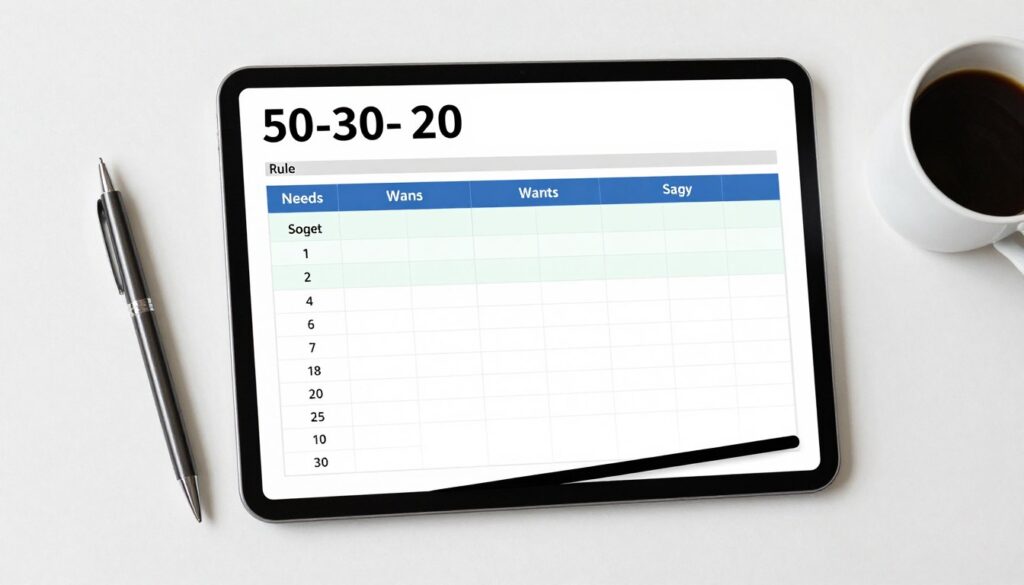
The 50/30/20 Rule Simplified
This budgeting framework divides your after-tax income into three categories. Allocate 50 percent to needs like rent, utilities, groceries, transportation, and minimum debt payments. Use 30 percent for wants such as dining out, entertainment, hobbies, and subscriptions. Direct 20 percent toward savings and extra debt payments beyond minimums.
This method works well for young adults because it’s flexible. If your rent eats up more than 50 percent of your income (common in expensive cities), adjust the percentages. Maybe shift to 60/20/20 temporarily while you work on increasing your income or finding more affordable housing.
Zero-Based Budgeting for Maximum Control
Zero-based budgeting assigns every dollar a job before the month begins. Your income minus your expenses should equal zero. This doesn’t mean spending everything. It means accounting for everything, including savings and investments.
This method requires more time upfront but gives you complete control over your money. Young adults with irregular income from freelancing or side hustles often find this approach helpful because it adapts to changing earnings each month.
Start Your Financial Journey Today
Our financial planning experts help young adults create personalized budgets and savings strategies. Get a free consultation to build your custom financial roadmap.
Practical Budgeting Tips That Actually Work
- Automate your savings transfers right after payday so you never see the money
- Use cash for discretionary spending categories where you tend to overspend
- Build small rewards into your budget to avoid feeling deprived
- Review and adjust your budget monthly as your life circumstances change
- Set up separate savings accounts for different goals to visualize progress
- Track spending in real-time using mobile apps linked to your accounts
Building Your Emergency Fund Safety Net
An emergency fund is your financial insurance policy. This money sits in a savings account waiting for genuine emergencies like job loss, medical bills, or urgent car repairs. Without this cushion, unexpected expenses force you into debt, derailing your financial progress.

How Much You Really Need
Financial experts recommend saving three to six months of living expenses in your emergency fund. For young adults just starting out, this can feel overwhelming. Start with a smaller goal of $1,000. This covers most common emergencies without requiring months of aggressive saving.
Once you hit that first milestone, work toward one month of expenses. Then three months. Then six. Breaking this large goal into smaller chunks makes it achievable and keeps you motivated as you check off each milestone.
Where to Keep Emergency Money
Your emergency fund needs to be easily accessible but separate from your regular checking account. A high-yield savings account is ideal. These accounts earn significantly more interest than traditional savings accounts while keeping your money liquid and safe.
Online banks typically offer the best interest rates on savings accounts. Look for accounts with no monthly fees, no minimum balance requirements, and FDIC insurance. The few extra dollars you earn in interest each month add up over time thanks to compound interest.
Open Your High-Yield Savings Account
Start building your emergency fund with our competitive savings account rates. No monthly fees, easy mobile access, and tools to help you reach your savings goals faster.
Smart Strategies for Managing Debt
Debt isn’t inherently evil, but it can become a massive obstacle to building wealth if mismanaged. Understanding the difference between good debt and bad debt helps you make smarter borrowing decisions throughout your life.

Good Debt vs. Bad Debt
Good debt typically involves borrowing money for things that increase in value or generate income over time. Student loans for education that boosts your earning potential, mortgages for homes that appreciate, and small business loans fall into this category. These debts often come with lower interest rates and tax benefits.
Bad debt includes credit cards used for everyday expenses you can’t afford, car loans for vehicles beyond your budget, and payday loans with predatory interest rates. This debt typically carries high interest rates and finances depreciating assets or consumable items.
The Debt Avalanche Method
This mathematically optimal approach minimizes interest paid over time. List all your debts by interest rate from highest to lowest. Make minimum payments on everything, then throw all extra money at the debt with the highest rate. Once that’s paid off, move to the next highest rate.
This method saves the most money but requires patience. It might take months to pay off that first debt if it’s large, which can feel discouraging.
The Debt Snowball Method
This psychological approach builds motivation through quick wins. List debts from smallest balance to largest regardless of interest rate. Pay minimums on everything except the smallest debt, which gets all your extra dollars. When that’s gone, move to the next smallest.
You’ll pay slightly more interest than the avalanche method, but many young adults find the psychological victories help them stick with the plan longer. The best debt payoff strategy is the one you’ll actually follow through completion.
Credit Card Management Tips
- Pay your full balance every month to avoid interest charges completely
- Keep credit utilization below 30 percent of your total available credit
- Set up automatic minimum payments so you never miss a due date
- Request credit limit increases to improve your utilization ratio
- Use credit cards strategically for rewards but never spend more than you have
- Review your credit card statements monthly for unauthorized charges
Building and Protecting Your Credit Score
Your credit score affects nearly every major financial decision you’ll make as an adult. This three-digit number influences whether you can rent an apartment, the interest rate on your car loan, and even job prospects in some industries. Understanding how credit works gives young adults a significant advantage.

What Actually Impacts Your Credit Score
Your payment history counts for 35 percent of your credit score. This means paying every bill on time matters more than anything else. Even one missed payment can drop your score by 100 points and stay on your report for seven years.
Credit utilization makes up 30 percent of your score. This ratio compares how much credit you’re using to your total available credit across all cards. Length of credit history accounts for 15 percent, which is why keeping your oldest credit card open benefits you even if you rarely use it.
New credit inquiries and your credit mix each contribute 10 percent. Opening multiple new accounts in a short time period signals risk to lenders and temporarily lowers your score.
Building Credit From Scratch
Young adults with no credit history face a chicken-and-egg problem. You need credit to build credit. Start with a secured credit card that requires a refundable deposit. Your deposit becomes your credit limit. Use it for small purchases and pay the balance in full each month.
After six months of responsible use, many issuers graduate you to an unsecured card and return your deposit. Alternatively, become an authorized user on a parent’s credit card with a long, positive history. Their good habits boost your credit without requiring you to have the card or even use it.
Credit Score Ranges: Scores range from 300 to 850. Excellent credit is 800 and above, very good is 740-799, good is 670-739, fair is 580-669, and poor is below 580. Most young adults start in the fair to good range and can reach excellent credit within a few years of responsible use.
Effective Savings Strategies for Long-Term Wealth
Saving money feels impossible when you’re earning an entry-level salary and juggling student loans, rent, and other expenses. The secret isn’t earning more right now (though that helps). It’s developing habits and systems that make saving automatic and painless.

Pay Yourself First
This principle transforms how you approach money. Instead of saving whatever remains at month’s end (usually nothing), you prioritize savings immediately when you get paid. Set up automatic transfers from checking to savings on payday before you have a chance to spend that money.
Start small if necessary. Even $25 per paycheck builds the habit and grows over time. As your income increases through raises and promotions, increase your automatic transfers proportionally. This way, lifestyle inflation never catches up with your earning power.
The Power of Compound Interest
Compound interest is the closest thing to magic in personal finance. Your money earns interest, then that interest earns interest, creating exponential growth over time. This is why starting young matters so much. Time is your greatest asset as a young adult investor.
Consider this example. If you save $200 monthly starting at age 25 with a 7 percent average annual return, you’ll have roughly $525,000 by age 65. Wait until age 35 to start, and you’ll only have about $244,000 with the same monthly contribution and return. Those 10 years cost you over $280,000 because of lost compound interest.
Multiple Savings Accounts Strategy
Open separate savings accounts for different goals. Label them specifically: Emergency Fund, House Down Payment, Vacation, New Car. This psychological trick helps you see progress toward each goal and prevents you from raiding your emergency fund for wants instead of needs.
Many online banks allow unlimited free savings accounts, making this strategy easy to implement. Some even let you set up automatic rules that split your deposits across multiple accounts based on percentages you define.
Calculate Your Savings Potential
Use our free financial calculators to see how small monthly savings grow into significant wealth over time. Visualize your financial future with compound interest projections and personalized savings plans.
Investing Fundamentals Every Young Adult Should Know
Investing feels intimidating to many young adults. The terminology sounds complex, the risks seem scary, and the stock market appears unpredictable. But investing is simply putting your money to work so it grows faster than inflation erodes its value. Starting early with even small amounts creates substantial wealth over time.

Why You Must Invest (Not Just Save)
Traditional savings accounts currently offer around 4 to 5 percent annual interest at best. Inflation historically averages about 3 percent yearly. Your money barely keeps pace with rising costs. Meanwhile, the stock market has historically returned about 10 percent annually over long time periods.
This difference might seem small, but over decades, it’s massive. Money saved in a savings account grows linearly. Money invested in diversified stocks grows exponentially through compound interest and market appreciation. Young adults who invest consistently from their twenties typically retire with seven figures, while those who only save struggle to reach six figures.
Retirement Accounts: Your Secret Weapon
Take full advantage of retirement accounts before investing in taxable accounts. If your employer offers a 401(k) with matching contributions, contribute at least enough to get the full match. This is literally free money. A typical 3 to 6 percent match effectively gives you an immediate 50 to 100 percent return on that portion of your investment.
After securing your employer match, consider opening a Roth IRA. You contribute after-tax dollars now, but all growth and withdrawals in retirement are completely tax-free. For young adults in relatively low tax brackets early in their careers, Roth accounts are usually more advantageous than traditional tax-deferred accounts.
Index Funds: The Smart Choice for Beginners
Individual stock picking is a losing game for most people, including many professionals. Instead, invest in low-cost index funds that track broad market indices like the S&P 500. These funds own hundreds or thousands of companies, providing instant diversification.
Index funds charge minimal fees (often under 0.10 percent annually) compared to actively managed funds (often 1 percent or more). This fee difference might seem trivial but costs you tens of thousands of dollars over a career. A young adult investing $500 monthly from age 25 to 65 with a 9 percent return would accumulate about $1.8 million. Drop that to 8 percent because of higher fees, and you end up with only $1.4 million. That 1 percent fee cost you $400,000.
Investment Allocation by Age
A common rule suggests subtracting your age from 110 to determine your stock percentage. A 25-year-old would hold 85 percent stocks and 15 percent bonds. This aggressive allocation makes sense for young adults because you have decades to ride out market volatility.
As you age, gradually shift toward more conservative investments. But in your twenties and thirties, embrace stock market volatility. Market downturns actually benefit young investors because you’re buying shares at discount prices that will appreciate over your long time horizon.
Tax-Advantaged Retirement Accounts
- 401(k) or 403(b) through employer with matching
- Roth IRA for young adults in lower tax brackets
- Traditional IRA for tax deductions in higher brackets
- HSA as a stealth retirement account with triple tax benefits
Taxable Investment Accounts
- Brokerage accounts for goals before retirement age
- No contribution limits or withdrawal restrictions
- Capital gains taxed at preferential rates if held over one year
- Consider tax-loss harvesting to offset gains
Starting Small Is Fine: Many brokerages now allow fractional share investing, meaning you can invest with as little as $5. You don’t need thousands of dollars to start. The important thing is developing the habit of consistent investing, not the initial amount.
Essential Insurance Coverage for Young Adults
Insurance feels like wasted money when you’re young and healthy. Nothing bad has happened yet, so why pay premiums? This thinking leaves many young adults vulnerable to financial catastrophe. The right insurance protects the financial foundation you’re building.

Health Insurance Is Non-Negotiable
Medical debt is the leading cause of bankruptcy in America. A single hospital visit for a serious illness or accident can generate bills exceeding $100,000. Even if you never go to doctors, you need health insurance for catastrophic coverage.
If you’re under 26, staying on your parents’ plan is usually the cheapest option. Otherwise, get coverage through your employer if available. If not, shop the health insurance marketplace during open enrollment. Choose a high-deductible plan paired with a Health Savings Account (HSA) if you’re healthy. This combination offers low premiums and triple tax advantages.
Renters Insurance Protects Your Belongings
Your landlord’s insurance covers the building, not your personal property. Renters insurance typically costs $15 to $30 monthly and covers your belongings if they’re stolen or destroyed by fire, water damage, or other covered events. It also provides liability protection if someone is injured in your rental.
Policies usually include temporary housing coverage if your rental becomes uninhabitable. Given the low cost and significant protection, renters insurance is one of the smartest purchases young adults can make.
Disability Insurance Guards Your Income
Your ability to earn income is your most valuable asset as a young adult. If you became unable to work due to illness or injury, how would you pay bills? Disability insurance replaces a portion of your income if you can’t work.
Many employers offer group disability insurance as a benefit. If yours doesn’t, consider purchasing an individual policy, especially if you work in a physically demanding field or have dependents relying on your income.
Life Insurance: When You Actually Need It
Most single young adults without dependents don’t need life insurance. The exception is if you have cosigned student loans with parents or siblings who would be stuck with the debt if you died. Once you have a spouse, children, or a mortgage, term life insurance becomes essential.
Term life insurance is inexpensive for young, healthy people. A 25-year-old can typically get a $500,000 policy for $20 to $30 monthly. Avoid whole life or universal life insurance policies marketed as investment vehicles. These complex products carry high fees and rarely outperform simple term insurance plus separate investments.
Strategies to Increase Your Income
Budgeting and saving are crucial, but there’s a limit to how much you can cut expenses. Eventually, increasing your income becomes the most effective way to achieve financial goals faster. Young adults have significant earning potential ahead of them, and strategic moves early in your career compound over time.

Invest in Your Skills
The best investment you can make in your twenties is in yourself. Take courses that develop in-demand skills. Earn certifications in your field. Attend industry conferences. Read books from experts in your profession. These investments in knowledge typically return far more than traditional investments.
Skills that increase your earning power compound like financial investments. A course that costs $500 but helps you negotiate a $5,000 raise returns 10 times your investment in just one year. Over a career, that one skill development might generate an extra $100,000 or more.
Master Salary Negotiation
Most young adults accept the first salary offer they receive, leaving thousands of dollars on the table. Companies typically offer 5 to 10 percent below what they’re willing to pay, expecting negotiation. By not negotiating, you’re essentially giving away money.
Research typical salaries for your role, experience level, and location using sites like Glassdoor and Payscale. When you receive an offer, express enthusiasm, then ask for 10 to 15 percent more than offered. The worst they can say is no, and you’ll often get at least part of what you requested. Even a $3,000 higher starting salary compounds throughout your career as future raises are typically percentage-based.
Develop Multiple Income Streams
Relying solely on one employer for all your income is risky. Layoffs happen. Industries change. Building additional income sources creates financial resilience and accelerates wealth building.
Start a side business based on your skills or hobbies. Freelance in your professional field. Create digital products like courses or templates. Rent out a spare room. These secondary income sources might start small but can grow substantially over time. Many successful entrepreneurs built their businesses as side hustles while keeping their day jobs for security.
Understanding Taxes and Maximizing Deductions
Taxes represent one of your largest lifetime expenses. The average American pays over $500,000 in taxes throughout their working years. Understanding how taxes work and leveraging available deductions and credits keeps more money in your pocket.

How Tax Brackets Actually Work
Many young adults misunderstand tax brackets and make poor financial decisions based on this confusion. The U.S. uses a progressive tax system with marginal tax rates. You don’t pay your top tax bracket rate on all your income, only on income above each threshold.
For example, if you’re single and earned $60,000, you’re in the 22 percent tax bracket. But you only pay 22 percent on income above $44,725. The first $11,000 is taxed at 10 percent, income from $11,000 to $44,725 at 12 percent, and only the remaining amount at 22 percent. Your effective tax rate (what you actually pay overall) is much lower than your marginal rate.
Tax-Advantaged Accounts Reduce Your Tax Bill
Contributing to retirement accounts like 401(k)s and traditional IRAs reduces your taxable income. If you earn $60,000 and contribute $6,000 to a traditional IRA, you only pay taxes on $54,000. This saves you over $1,300 in taxes in the 22 percent bracket.
Health Savings Accounts (HSAs) offer even better tax benefits. Contributions reduce taxable income, growth is tax-free, and withdrawals for qualified medical expenses are tax-free. This triple tax advantage makes HSAs powerful wealth-building tools if you can afford to pay medical expenses out of pocket and let your HSA grow.
Common Deductions for Young Adults
- Student loan interest up to $2,500 annually even if you don’t itemize
- Traditional IRA contributions up to $6,500 annually if you meet income requirements
- HSA contributions up to $3,850 for individuals or $7,750 for families
- State and local taxes up to $10,000 if you itemize deductions
- Charitable contributions if you itemize and have receipts
- Home office expenses if you’re self-employed and meet IRS requirements
Don’t Fear Tax Raises: Some young adults turn down raises or promotions because they fear moving into a higher tax bracket. This is financial self-sabotage. You always keep more money when you earn more, even if a portion is taxed at a higher rate. A raise from $50,000 to $55,000 means keeping about $3,500 after taxes, not losing money.
Get Personalized Tax Planning Help
Our financial advisors help young adults navigate tax strategies, maximize deductions, and structure accounts for optimal tax efficiency. Schedule a consultation to reduce your tax burden legally and keep more of what you earn.
Setting and Achieving Meaningful Financial Goals
Goals transform vague financial intentions into concrete achievements. Without clear targets, your money disappears into day-to-day spending. With well-defined goals, every dollar has purpose and direction. Young adults who set specific financial goals accumulate significantly more wealth than those who drift financially.

Short-Term vs. Long-Term Goals
Short-term financial goals span the next one to three years. These might include building your emergency fund to $10,000, paying off a credit card, or saving $5,000 for a vacation. Short-term goals should be specific, measurable, and time-bound.
Long-term goals extend beyond three years and often decades into your future. These include saving for a house down payment, accumulating a retirement nest egg, or becoming debt-free. Break intimidating long-term goals into smaller milestones to maintain motivation and track progress.
The SMART Goal Framework
Make your financial goals SMART: Specific, Measurable, Achievable, Relevant, and Time-bound. Instead of “save more money,” try “save $500 per month for 12 months to build a $6,000 emergency fund by December 31.” This specificity creates accountability and clear action steps.
Write your goals down and review them monthly. People who write down their goals are significantly more likely to achieve them than those who keep goals as vague mental intentions. Place your written goals somewhere visible as a daily reminder of what you’re working toward.
Prioritizing Competing Goals
Young adults often have multiple financial goals competing for limited resources. How do you choose between paying off student loans, saving for retirement, and building a house down payment? This hierarchy provides a framework:
- Build a starter emergency fund of $1,000 to $2,000
- Contribute enough to your 401(k) to get full employer match
- Pay off high-interest debt (credit cards, payday loans)
- Build your emergency fund to three to six months of expenses
- Maximize retirement contributions up to IRS limits
- Save for other goals like houses, education, or major purchases
- Pay off low-interest debt (student loans, mortgages)
This order optimizes your financial security while maximizing long-term wealth building. You establish safety nets first, then leverage time and compound interest through retirement investing, before tackling other goals.
Common Financial Mistakes Young Adults Make (And How to Avoid Them)
Learning from others’ mistakes is cheaper and less painful than making them yourself. These common financial errors derail many young adults, but they’re completely avoidable with awareness and planning.

Lifestyle Inflation Trap
As your income increases, your expenses tend to rise proportionally. You get a raise and immediately upgrade your apartment, car, and lifestyle. This phenomenon, called lifestyle inflation, keeps you living paycheck to paycheck regardless of income level.
Combat lifestyle inflation by saving or investing at least half of every raise before adjusting your lifestyle. When you get a $5,000 annual raise, increase your 401(k) contributions by $200 per month. Now you still have $100 monthly to enjoy, but you’re also building wealth for your future.
Ignoring Retirement Because It Feels Far Away
Retirement seems irrelevant in your twenties, making it easy to postpone saving. This is the costliest mistake young adults make. Starting retirement savings at 25 versus 35 can mean the difference between retiring comfortably at 60 or working into your seventies.
Thanks to compound interest, money invested in your twenties grows exponentially more than money invested in your forties and fifties. Even small contributions now outperform larger contributions later. Make retirement savings automatic and non-negotiable from your first professional paycheck.
Financing Rapidly Depreciating Assets
Taking a seven-year auto loan to afford a new car is financial self-sabotage. New cars lose 20 to 30 percent of their value the moment you drive off the lot and continue depreciating rapidly. You’ll be underwater on the loan (owing more than the car is worth) for years.
Buy reliable used cars that are two to three years old instead. Let someone else absorb that initial depreciation. Finance for no more than three to four years, or better yet, save cash and avoid interest entirely. Apply the same logic to other depreciating items like electronics, furniture, and gadgets.
Not Reading the Fine Print
Credit cards, bank accounts, insurance policies, and loan documents contain terms that significantly impact your finances. Many young adults sign without reading, then get hit with unexpected fees, interest rate increases, or unfavorable terms.
Develop the habit of reading contracts before signing. Pay special attention to interest rates, fees, penalties, and cancellation terms. If something is confusing, ask questions or consult someone with more experience. A few minutes of careful reading can save thousands of dollars.
Financial Habits to Embrace
- Automate savings and bill payments
- Track every dollar you spend for at least three months
- Build multiple emergency funds for different purposes
- Invest consistently regardless of market conditions
- Continuously develop skills that increase earning power
- Review and optimize your finances quarterly
Financial Habits to Avoid
- Carrying credit card balances month to month
- Making only minimum payments on any debt
- Lifestyle inflation with every income increase
- Ignoring retirement savings until your thirties
- Buying new cars or other rapidly depreciating assets
- Comparing your finances to social media appearances
Continuing Your Financial Education
Personal finance isn’t a one-time learning event. Tax laws change. New investment options emerge. Your financial situation evolves. Commit to ongoing financial education to make progressively better money decisions throughout your life.

Essential Books for Financial Foundation
Reading classic personal finance books gives you frameworks that apply regardless of economic conditions. Start with “The Total Money Transformation” for debt management and basic budgeting. “The Simple Path to Wealth” offers straightforward investing advice perfect for young adults. “I Will Teach You to Be Rich” provides a comprehensive six-week program covering banking, saving, investing, and automation.
Each of these books costs less than $20 but contains knowledge worth thousands of dollars in improved financial outcomes. Invest one hour per week reading financial books and you’ll understand money better than most adults.
Podcasts and Digital Resources
Financial podcasts turn your commute or workout time into education. “ChooseFI” focuses on financial independence for young people. “The Dave Ramsey Show” offers debt payoff motivation and budgeting advice. “BiggerPockets Money Podcast” covers personal finance and wealth building comprehensively.
Follow reputable personal finance blogs and YouTube channels. Set up Google Alerts for financial topics you want to learn more about. Join online communities where people discuss money openly and learn from others’ experiences and mistakes.
Consider Professional Guidance
For complex situations or when you need accountability, working with a fee-only financial planner can be valuable. These professionals charge flat fees or hourly rates rather than earning commissions on products they sell you, avoiding conflicts of interest.
A good financial planner helps you create a comprehensive plan, optimizes your tax strategy, and keeps you accountable to your goals. Even one or two sessions in your twenties can set you on a dramatically better financial trajectory.
Taking Control of Your Financial Future Starts Today
Personal finance advice for young adults isn’t complicated, but it does require action. You now understand the fundamentals: budgeting to control spending, saving systematically for emergencies and goals, investing early to harness compound interest, managing debt strategically, building credit responsibly, and protecting your assets with appropriate insurance.
The difference between financial stress and financial freedom often comes down to habits formed in your twenties. Small actions taken consistently over time create exponential results. Saving $200 monthly might feel insignificant now, but in thirty years, that habit builds wealth exceeding half a million dollars. Conversely, carrying credit card debt and delaying retirement savings creates a financial burden that becomes increasingly difficult to escape.
Your financial journey won’t be perfect. You’ll make mistakes, face unexpected expenses, and occasionally feel overwhelmed. That’s normal and expected. What matters is developing systems that keep you moving in the right direction despite setbacks. Automate your savings. Set up alerts for bills. Review your budget monthly. These simple systems create consistency that compounds into life-changing results.

Remember that personal finance is exactly that: personal. Your goals, values, and circumstances are unique. Don’t compare your financial journey to others, especially on social media where people showcase highlight reels rather than reality. Focus on steady progress toward your own goals rather than keeping up with others’ spending.
The personal finance advice for young adults covered in this guide provides a comprehensive foundation. Now it’s time to take action. Choose one area to improve this month. Maybe you’ll build your first budget, open a high-yield savings account, or start contributing to your employer’s 401(k). Next month, tackle another area. Consistent progress beats perfect planning.
Your future self will thank you for the financial discipline you develop today. The money habits you establish now will serve you for decades, providing security, reducing stress, and creating opportunities. You have the knowledge. You have the tools. Now you just need to start.
Ready to Transform Your Financial Future?
Don’t navigate your financial journey alone. Our experienced advisors specialize in helping young adults build personalized financial plans that work. Schedule your free consultation today and take the first step toward lasting financial success.